

We are committed to digital wellness for our community’s youth
Why we support Smartphone Smart
Delaying smartphone use until age 13 or later helps protect children’s physical and mental health. The resources on this page can help parents decide if their teen is ready for a smartphone and guide healthy use for teens who have one.
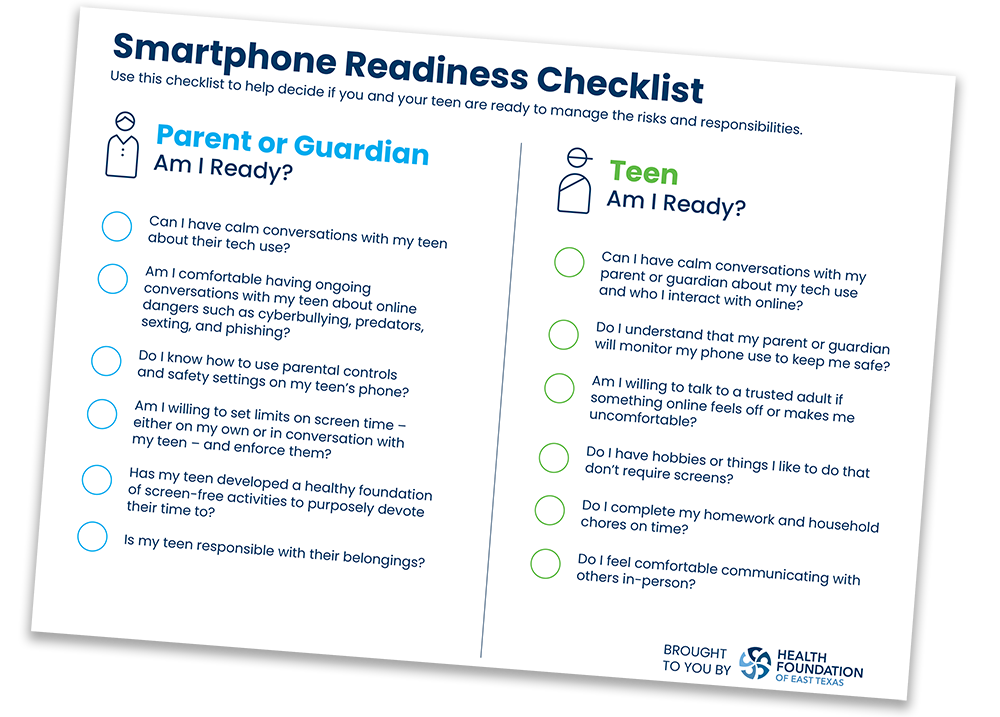
Readiness Checklist
Smartphones can be a great tool for connection and creativity. They also come with responsibilities. The Readiness Checklist helps you reflect on two important questions:
- Is your teen ready to use a smartphone responsibly and work with you when issues come up?
- Are you ready to set rules around phone use?
How to support healthy smartphone use
Parental controls on your teen’s smartphone can help build a strong foundation for healthy use. We’ve included two step-by-step Family Tech videos to help you get started. After those tools are in place, here are ways to support healthier phone habits:
Healthy limits can help teens save time for homework, hobbies and sleep.
- Talk with your teen about the importance of setting limits to protect their health, and to leave time for offline activities.
- Automated tools can help. iPhone allows automated screen time limits and downtime settings, and Android allows you to manage screen time, if needed.
- Putting phones “to bed” at night in a shared family space outside your teen’s bedroom can help protect their sleep.
Restrictions to certain apps and content can help keep your teen safe online.
- Apple helps you block content and unknown contacts to help keep your teen safe.
- Android lets you block certain apps and prevent unknown contacts from connecting with your teen.

The evidence for waiting until age 13
Recent research published by the American Academy of Pediatrics adds to the growing body of evidence for holding off on smartphones until age 13 or later. The national study found that children at age 12 with smartphones were significantly more likely to experience obesity, depression, and insufficient sleep, compared to their peers without smartphones. They also found that the younger a child is when they get a smartphone, the greater these risks become. Even among children who didn’t have a smartphone at 12, those who got one over the next year were significantly more likely, by age 13, to report serious mental health and sleep problems than peers who still didn’t have one. Notably, these shifts appeared within a single year, even after accounting for how children were doing before they got a phone.
Our Foundation is committed to creating a community where youth can thrive, and we believe digital wellness is integral to achieving that goal. As we continue this work, we will ground our efforts in both thorough research and the unique needs of East Texas.